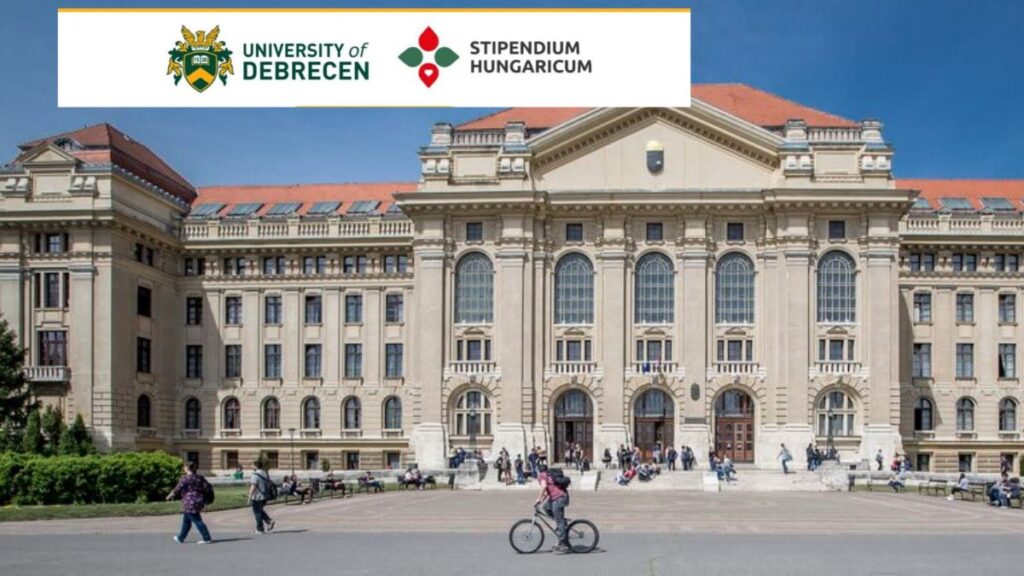
Looking to launch a high-impact career in healthcare, aviation, engineering or business? The University of Debrecen (UD) in Hungary offers world-class, English-taught education in the heart of Europe. With a vibrant campus of around 28,000 students, UD is one of the country’s largest and most respected institutions. Here’s why it should be on your shortlist.
Why Choose the University of Debrecen?
- Globally recognised programmes – Degrees in medicine, dentistry, nursing and pharmacy are internationally accredited, preparing graduates for global practice.
- Competitive tuition – Non-medical degrees cost around USD 7,000–7,500 per year, while medicine and dentistry programmes range from USD 16,900 to 17,500 per year.
- Practical learning – Clinical rotations, laboratories, and internships are built into programmes, giving students valuable hands-on experience.
- Strategic location – Debrecen, Hungary’s second-largest city, offers affordable living and easy access to major European destinations.
Programme Highlights and Fees
- Doctor of Medicine (MD) – 6 years (12 semesters), approx. USD 16,900 per year, including extensive clinical training.
- Dentistry (DMD) – 5 years (10 semesters), approx. USD 17,500 per year.
- Pharmacy (Pharm.D) – 5 years (10 semesters), around USD 8,000 per year.
- Nursing (BSc) – 4 years (8 semesters), approx. USD 6,500 per year.
- Physiotherapy (BSc) – 4 years, approx. USD 6,000 per year.
- Public Health (MSc) – 1.5 years (3 semesters), approx. USD 8,000 per year.
- Business Administration & Management (BSc) – 3.5 years, about USD 7,000 per year.
- Commerce & Marketing (BSc) – similar duration and fee.
- Computer Science & Engineering (Civil, Electrical, Mechanical) – 6–8 semesters, USD 7,000–7,500 per year.
- Professional Pilot (BSc) – 7 semesters, USD 35,000 per year (includes flight training and requires an aviation medical certificate).
Living in Hungary
Studying in Debrecen means enjoying a lower cost of living compared to Western Europe. Students typically spend USD 4,200–8,900 annually on accommodation, with utilities averaging USD 750–1,100 per year. Public transport passes cost around USD 130–140 per month. Health insurance, food, and entertainment are also affordable, making Hungary an attractive study destination.Admission and Visa Essentials
- Entry requirements: A strong secondary-school certificate is needed. For health sciences, applicants must pass entrance exams in biology, chemistry and physics. Business and engineering often test mathematics and English.
- English proficiency: IELTS/TOEFL scores are required (e.g., IELTS 6.0 for the pilot programme).
- Application fees: USD 150 application fee + USD 350 entrance exam fee.
- Visa requirements: Passport, proof of accommodation, financial statements, acceptance letter, and health insurance are mandatory for a student visa.